Why Your Ceiling Stain Comes Back After Spring Rain

Spring rain exposes unfinished moisture problems. A ceiling stain that looked faint all winter can darken after one windy storm, then fade again as the surface dries. In older homes, multi-tenant properties, commercial corridors, and foothill or valley communities, that pattern usually means the finish is only a part of the story.
The stain may come from an active roof detail, plumbing above, HVAC condensation, or water trapped inside the ceiling assembly. Your real goal is not to hide the mark. It is to stop re-wetting, lingering moisture, hidden mold risk, odor absorption, warping, corrosion, and finish failure before the next rain cycle.
Why the Stain Returns After the Ceiling Looks Dry
A recurring stain usually means moisture, stain residue, or both are still moving through the material.
Water follows paths you cannot see
A roof leak does not always appear directly below the entry point. Water can travel along rafters, insulation, ducts, pipe penetrations, or framing before it reaches drywall or plaster. This guide to a water-damaged ceiling explains why the source must be corrected before the surface repair can last.
Old stains can bleed through new paint
Brown ceiling stains often contain tannins, dirt, roofing residue, rust, or dissolved minerals. If the area was painted before it dried, or if stain-blocking primer was skipped, discoloration can bleed through the new coating even after the leak stops.
Damp material keeps feeding the problem
The CDC advises that when water gets into a home, wet items should be cleaned and dried or removed within 24 to 48 hours to help prevent mold growth. That 24 to 48-hour window matters when the leak happens and again before you close, prime, or repaint a ceiling.
Common Hidden Causes After Spring Rain
The timing of the stain can narrow the source, but it rarely proves the cause by itself.
Roof and exterior envelope leaks
Wind-driven rain can push water under lifted roofing, around flashing, through roof penetrations, behind exterior cracks, and into weak window or wall details. Small exterior gaps may stay quiet during light showers and become active during heavy rain.
Plumbing lines above the ceiling
A stain below a bathroom, laundry room, kitchenette, or mechanical space may come from a drain line, supply line, toilet seal, appliance connection, or overflow. Cold snaps can stress vulnerable pipes, and seasonal turnover can leave small leaks unnoticed.
HVAC, condensation, and drainage issues
Attic HVAC equipment, clogged condensate lines, duct sweating, poor ventilation, overflowing gutters, and wall penetrations can all create ceiling stains that mimic roof leaks.
For larger wet areas, water damage restoration can include water extraction, drying, dehumidifying, structural restoration, cleanup, debris removal, and related mitigation steps when conditions require them.
When a Ceiling Stain Becomes a Safety Issue
Some ceiling stains can wait for investigation, but others require immediate caution.
Do not touch or disturb a ceiling that is sagging, soft, actively dripping, or near light fixtures, outlets, panels, or equipment. Water and electricity create serious hazards. If the ceiling bows, stay clear because wet drywall or plaster can fail suddenly.
Recurring stains also deserve extra attention in commercial corridors, multi-tenant properties, and seasonal visitor districts. Moisture can cross unit lines and enter shared assemblies.
FEMA’s National Flood Insurance Program warns that 1 inch of floodwater can cause roughly $25,000 in damage. A ceiling leak is different from floodwater, but the number shows how quickly water can affect connected materials.
If the stain keeps darkening after rain, develops a musty odor, or appears with bubbling paint and swollen trim, review how secondary water damage develops after initial cleanup.
What to Do Before You Repaint the Stain
A clean finish only lasts when the source, moisture, and surface preparation are handled in the right order.
Confirm the source is stopped
- Check the roofline, attic, plumbing above, HVAC equipment, gutters, exterior wall penetrations, and nearby fixtures.
- If the stain appears only after rain, focus on exterior entry points first.
- If it appears after showers, laundry, or fixture use, look at plumbing and ventilation.
Verify dryness, not just appearance
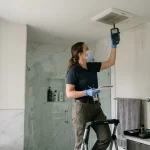
A ceiling can feel dry while insulation, framing, or the back of the drywall remains damp. Keep the 24 to 48-hour drying window in mind, but base the finish decision on actual conditions, not the calendar. Moisture meters, thermal imaging, and targeted inspection can help reveal hidden dampness.
Repair only when the assembly is ready
Wet insulation, damaged texture, compromised drywall, or contaminated material may not be a good candidate for simple patching. If water reaches cavities or porous materials, compare the visible stain with other signs described in what water damage looks like.
Once the cause is corrected and the material is dry, clean the surface, remove loose paint, repair damage, and use a stain-blocking primer before finishing paint.
How to Prevent the Next Stain From Coming Back
Prevention depends on inspection, drying discipline, and seasonal maintenance rather than cosmetic coverups.
Before the next rainy period
Clean gutters, check roof penetrations, look for cracked sealant, inspect attic staining, and document vulnerable areas with photos. In older homes and commercial properties, records of repeat stain locations help reveal patterns.
During cold snaps and seasonal transitions
Watch plumbing in vulnerable spaces, check under sinks and around appliances, and keep ventilation working in humid rooms. HVAC and condensation season can reintroduce moisture into nearly dry spaces.
After any leak or stain event
Document the stain, stop the source, protect people first, and dry materials thoroughly. Dehumidification may be part of the drying process when moisture has migrated into assemblies or indoor humidity remains elevated.
This overview of dehumidifiers in water damage restoration explains why equipment alone does not replace source control, inspection, or verification.
The Bottom Line: Treat the Stain as Evidence
A returning ceiling stain is a decision point, not a decorating problem.
When a ceiling stain keeps coming back after the last spring rain, assume something remains unresolved. The source may still be active, the ceiling may not be dry inside, or the stain may not have been sealed correctly after proper drying.
The FEMA $25,000 floodwater benchmark is not a ceiling-stain repair estimate, but it reinforces why water documentation matters.
Start with safety, trace the moisture path, verify dryness, and delay repainting until the materials are ready. If the issue involves hidden moisture, odor, visible growth, or damp materials that may need controlled removal, a qualified assessment can reduce recurring disruption.
When mold concerns are present, mold removal may be part of a broader moisture-control plan, but the moisture source must still be addressed.
Frequently Asked Questions
A recurring ceiling stain usually means moisture is still entering, hidden material is still damp, or old staining compounds are bleeding through the finish. Rain can activate small exterior gaps that stay quiet in dry weather. The stain should be treated as a moisture clue before you repaint.
Only after the source is fixed and the ceiling assembly is verified dry. A dry surface does not prove that insulation, framing, or the back of drywall is dry. Painting too soon can trap moisture and cause stain bleed-through or adhesion failure.
Not always. Roof details are common suspects, but plumbing, HVAC condensation, gutters, wall penetrations, and ventilation problems can create similar stains. Timing helps guide the investigation, but it does not prove the source. Trace the moisture path before choosing a repair.
Sagging, active dripping, soft drywall, staining near electrical fixtures, musty odor, bubbling paint, and spreading discoloration deserve prompt attention. Avoid touching wet electrical areas or bowed ceilings. Call qualified professionals if structural, electrical, or contamination concerns may be present.
Water often travels before it becomes visible. It can run along framing, insulation, pipes, ducts, or ceiling slopes before soaking into drywall. That is why the visible ring may sit several feet away from the actual entry point.
Yes. Clogged condensate lines, drain pan issues, duct sweating, poor ventilation, and attic HVAC equipment can create ceiling stains. These problems may worsen during seasonal transitions when indoor humidity and system use change. The stain may look like a roof leak even when the source is mechanical.
Not automatically, but recurring moisture can create conditions that support growth.
Musty odor, repeated dampness, visible spotting, or staining near porous materials should be taken seriously. Avoid disturbing suspect materials and consult qualified professionals for assessment when needed.
Do not cut into a ceiling if there is sagging, electrical risk, active dripping, or possible contamination. Opening wet materials can release debris and create additional hazards.
A targeted inspection with moisture tools is usually safer and more informative.
1. Document the stain with dates, photos, weather conditions, and any fixture used above the affected area.
2. Check adjacent units, shared walls, ceilings, and mechanical spaces because moisture can migrate.
3. Keep communication clear and avoid closing repairs until the source and dryness are verified.
Dehumidification helps remove moisture from indoor air and can support drying of affected materials. It is not a standalone fix because it does not stop the leak, remove damaged materials, or prove hidden areas are dry. Source control, inspection, drying, and verification should work together.
Coverage depends on your policy, the cause, timing, and whether the damage is sudden or long-term. Do not assume coverage based only on appearance. Photograph the area, keep repair records, and ask your insurer how your policy treats roof intrusion, plumbing failure, mold-related conditions, and repeated damage.