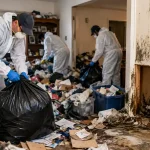
Commercial Disinfection After Water Intrusion: A Facility Guide

Seasonal water losses rarely arrive as one clean problem. Wind-driven rain can enter around roofs and exterior openings. Cold snaps can stress plumbing, while HVAC and condensation season can create moisture above ceilings.
In clinics, offices, and multi-tenant facilities, you need to do more than remove water. You also need to control contamination and prevent secondary damage such as odor, warping, corrosion, finish failures, and hidden mold growth.
Why Water Intrusion Changes the Cleaning Plan
Water can travel well beyond the visible wet area, so effective cleanup requires understanding both the source and the full moisture path.
Water can move under flooring, wick into drywall, enter wall cavities, and reach equipment before a surface looks heavily damaged. That is why ordinary janitorial cleaning is not enough after a meaningful water loss.
The water source and migration path shape the response. A supply-line leak presents different concerns than a drain backup, overflow, or water that passed through contaminated materials.
In commercial buildings, one leak may affect treatment rooms, offices, storage, shared corridors, or mechanical spaces.
EPA flood-cleanup guidance recommends removing dirt and contaminants from surfaces before using disinfectants or sanitizers.
Products also need to be used according to their labels and on compatible materials. This sequence matters because disinfection works best on surfaces that have already been properly cleaned.
What to Do Before Commercial Disinfection Begins
Early decisions should focus on safety, source control, moisture removal, and keeping affected materials from creating additional problems.
- Stop or isolate the water source when it is safe to do so.
- Keep occupants away from standing water, wet electrical components, damaged ceilings, and visibly contaminated areas.
- Document affected rooms, equipment, contents, and visible water paths before moving items unnecessarily.
- Remove standing water and begin controlled drying.
- Identify porous materials that may not be cleanable or dryable in place.
- Check adjacent rooms, wall bases, flooring transitions, and shared assemblies for hidden moisture.
For commercial properties where water has spread beyond a simple surface spill, our disinfection application services can be coordinated with restoration needs rather than treated as a separate housekeeping task. If you need help assessing the loss, call American Craftsman Restoration at (661) 295-5176.
What Professional Disinfection After Water Damage Involves
Commercial disinfection works best as one phase of a larger restoration process that addresses moisture, contamination, materials, and occupancy needs.
Moisture Mapping and Controlled Drying
Visible water is only part of the loss. Moisture meters, hygrometers, infrared cameras, dehumidifiers, and other drying tools can help identify and manage moisture that has migrated into building materials.
Drying also protects the repair phase. Reinstalling flooring, paint, trim, cabinetry, or wall finishes before assemblies are adequately dry can trap moisture and contribute to odor, swelling, adhesion problems, and recurring damage.
A structured commercial water damage triage process helps determine what should be stabilized, moved, cleaned, or evaluated first.
Cleaning Before Disinfection
Soil, residue, and organic matter can interfere with surface disinfection. Hard, nonporous surfaces generally need physical cleaning before an appropriate disinfectant is applied.
Porous materials need more careful decisions. Some may be dried and cleaned, while others may need removal if contamination or deterioration prevents reliable restoration.
Containment and Cross-Contamination Control
Clinics and shared facilities may need work zones separated from occupied areas. Barriers, controlled access, and airflow planning can reduce the chance that dust, debris, moisture, or disturbed contaminants migrate into clean spaces.
Healthcare facility recovery guidance also emphasizes evaluating water damage, ventilation, utilities, medical equipment, and other facility systems before reopening after extensive water and wind damage.
In sensitive environments, restoration and infection-control planning should be coordinated with facility leadership and qualified specialists.
Facility-Specific Priorities for Clinics, Offices, and Shared Buildings
The basic recovery principles remain consistent, but the building’s use determines which areas, systems, and contents need attention first.
Clinics and Healthcare Spaces
Treatment areas, waiting rooms, storage, medical equipment, and HVAC systems can create a complicated recovery sequence.
Do not power up water-exposed medical or electrical equipment simply because the exterior appears dry. Equipment may need evaluation by qualified personnel or the manufacturer.
Our healthcare disinfection work includes containment and infection-control methods for hospital and healthcare environments. Construction or repair work in these settings may also require additional planning to limit dust and disturbed particles.
Offices and Administrative Spaces
Office losses often spread through carpet systems, ceiling tiles, drywall, furniture, records, and shared HVAC zones. Protect dry records and electronics from continuing exposure, but avoid moving wet or questionable items into unaffected rooms without a plan.
A practical first-hour water damage response should focus on safety, source control, documentation, asset protection, and drying decisions. That sequence is more useful than trying to clean every visible surface immediately.
Shared and Multi-Tenant Facilities
In mixed-use buildings and commercial corridors, water can cross suite lines through wall cavities, flooring systems, plumbing chases, and ceilings. One tenant may see staining while another has hidden moisture.
Property managers should track affected areas, system shutdowns, drying equipment, and conditions that must be met before spaces return to normal use.
How to Prevent Secondary Damage After the Initial Cleanup
The period after visible water removal is critical because trapped moisture can continue damaging materials behind otherwise dry-looking finishes.
- Verify the source repair before closing walls or replacing finishes.
- Continue checking concealed and adjacent materials for lingering moisture.
- Watch for musty odor, staining, swelling, corrosion, peeling coatings, or recurring dampness.
- Keep wet contents from re-wetting cleaned surfaces.
- Do not restart HVAC systems blindly if they may have been affected by the loss.
- Document final conditions before repairs, turnover, or reopening.
Hidden moisture can continue spreading beneath finishes even after the original puddle is gone. Professional water damage containment and drying focuses on the migration path, not just the visible wet spot.
If moisture has remained in porous materials, a mold-related assessment may also be appropriate before rebuilding.
When Disinfection Should Be Part of the Restoration Scope
The source, duration, occupancy type, affected materials, and potential contamination determine whether specialized disinfection belongs in the recovery plan.
Not every clean-water spill requires specialized disinfection. The need increases when water is contaminated, has traveled through dirty materials, has remained in place long enough to raise microbial concerns, or has affected sensitive occupancies.
Professional support is especially important when the incident involves sewage, multiple rooms, healthcare areas, persistent odor, visible microbial growth, or uncertain hidden moisture.
A final inspection after water damage should confirm source control, drying progress, visual condition, affected systems, contents, and documentation before the repair phase is considered complete.
Plan the Recovery Around the Building, Not Just the Puddle
A complete recovery plan follows water from its source through drying, cleaning, disinfection, repair, and final verification.
A water loss in a clinic, office, or shared facility can interrupt operations long after standing water disappears. The best recovery plan follows the full path of the intrusion: source, migration, extraction, drying, cleaning, disinfection, repair, and verification.
We specialize in commercial emergency water and fire damage mitigation, mold remediation, and hospital-grade disinfection, with emergency service available 24/7/365.
Frequently Asked Questions
Does every commercial water leak require disinfection?
No. A small, promptly addressed clean-water spill may primarily require extraction and drying. Disinfection becomes more important when contamination is suspected, water travels through dirty materials, porous materials remain wet, or sensitive areas such as clinics are affected.
Should a facility be disinfected before it is completely dry?
Cleaning and moisture control usually need to progress alongside one another, but simply applying disinfectant to a wet structure does not resolve the underlying water problem. The source must be controlled, standing water removed, and affected materials evaluated so moisture does not remain trapped.
Can regular office cleaning staff handle water-damage disinfection?
Routine cleaning staff may be able to manage a very small, uncontaminated surface spill within normal procedures. Larger losses, sewage exposure, hidden moisture, affected building systems, or healthcare environments can require specialized restoration, containment, and disinfection expertise.
What areas should be checked for hidden moisture after a leak?
Pay attention to wall bases, drywall cavities, carpet and pad, subfloors, cabinets, ceiling assemblies, insulation, and transitions between rooms. Shared walls, plumbing chases, and areas below the original leak also deserve inspection because water can migrate away from the visible source.
When should wet drywall or other porous material be removed?
Removal decisions depend on the water source, contamination, material condition, and whether the material can be cleaned and dried effectively. Saturated, deteriorated, contaminated, or mold-affected porous materials may require removal rather than surface treatment alone.
Why does a clinic need extra precautions after water intrusion?
Clinics can contain sensitive occupants, treatment spaces, medical equipment, stored supplies, and infection-control requirements that complicate ordinary restoration. Water-damaged equipment and building systems may also require evaluation by qualified personnel before they return to service.
Can you keep part of an office or shared building open during restoration?
That depends on the location and extent of damage, contamination concerns, affected utilities, and whether work can be contained from occupied areas. Facility leadership and qualified professionals should determine access based on actual site conditions rather than assuming an unaffected-looking room is suitable for normal use.
What does a musty odor after water cleanup mean?
A persistent musty or damp odor can indicate lingering moisture, contaminated materials, or microbial activity that deserves further investigation. Do not simply cover the odor with fragrance or coatings. The moisture source and affected materials need to be evaluated first.
Should HVAC systems run during water-damage cleanup?
Do not automatically use HVAC equipment for drying if the system or nearby components may have been exposed to water or contamination. Operating an affected system could distribute moisture, odor, dust, or contaminants into additional areas. Qualified evaluation may be necessary before restart.
How can property managers reduce disruption during a commercial water loss?
Start with a clear incident record that identifies the source, affected rooms, shutoffs, contents, equipment, and actions already taken. Coordinate drying, cleaning, disinfection, repairs, and occupant communication so separate contractors or tenants do not create conflicting work sequences.
What should be checked before repairs and new finishes begin?
Confirm that the water source is corrected and affected assemblies have been appropriately dried. Look for remaining staining, swelling, odors, corrosion, or moisture in concealed areas. Closing walls or installing new flooring over unresolved moisture can create recurring damage.
When should you call a restoration and disinfection professional?
Escalate the situation when water affects several rooms, shared building assemblies, healthcare spaces, electrical areas, sewage systems, or valuable equipment. Persistent moisture, odor, visible microbial growth, and uncertainty about contamination are also strong reasons to seek qualified assessment.