Does Homeowners Insurance Cover Biohazard Cleanup?
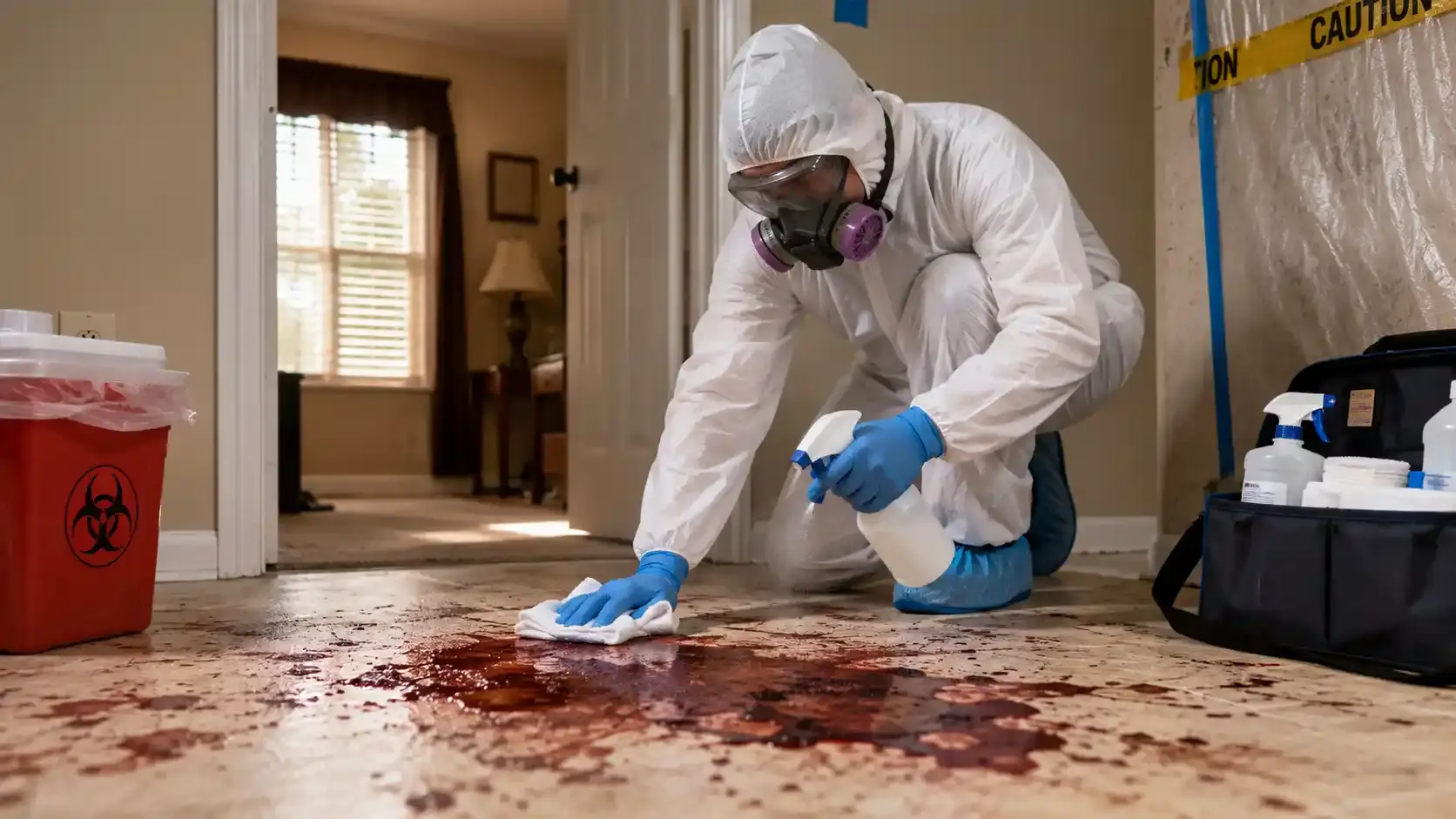
A biohazard event can turn an ordinary property problem into an urgent safety and restoration issue. An accident may leave blood on the flooring. An unattended death can affect porous building materials and create persistent odors.
A sewage incident or other contamination event may spread beyond the area where the problem first appeared.
Seasonal property conditions can make the aftermath more complicated. Wind-driven rain can introduce moisture into already affected materials.
Cold snaps can expose vulnerable plumbing. HVAC condensation may add moisture to enclosed spaces. In multi-tenant properties, contamination discovered during turnover can also involve flooring, walls, contents, and adjoining areas.
That leads to a practical question: Does homeowners insurance cover biohazard cleanup?
The answer is sometimes, but not automatically. Coverage depends primarily on what caused the loss, what your policy covers or excludes, which property was damaged, and how the insurer evaluates the claim.
Does Homeowners Insurance Cover Biohazard Cleanup?
Coverage usually depends on the event that caused the contamination rather than the word “biohazard” alone.
Homeowners policies protect against covered causes of loss, often called perils. Some policies cover specifically named perils, while others cover a broader range of causes except those expressly excluded.
The National Association of Insurance Commissioners explains homeowners insurance coverage in terms of covered perils, policy limits, exclusions, deductibles, and the type of property affected.
Therefore, asking whether biohazard cleanup is covered requires a second question: What caused the contamination?
A sudden accident, crime-related event, or other covered occurrence may create a potentially covered property loss that also requires specialized cleanup.
Some policies may cover portions of remediation, damaged building materials, or affected personal property. Other circumstances may fall under an exclusion or require additional coverage.
Never assume approval based solely on the type of cleanup. Review your policy and contact your insurer or licensed insurance professional about the specific event.
Accidents involving blood or bodily fluids
An unexpected injury inside a home can contaminate hard surfaces, carpeting, upholstery, flooring, drywall, or other materials.
Blood and certain bodily fluids require more than ordinary housekeeping when significant contamination occurs.
OSHA’s Bloodborne Pathogens Standard treats human blood and certain body fluids as potentially infectious in occupational settings and requires appropriate cleaning and decontamination after exposure.
Professional blood cleanup services may therefore involve containment, treatment of affected areas, and removal of materials that cannot be adequately cleaned.
Death and trauma-related contamination
An unattended death, traumatic accident, suicide, or similar event can affect far more than the visible surface.
Fluids may penetrate carpeting, padding, subflooring, furniture, wall materials, or contents. Odors can also migrate into porous materials.
Understanding how trauma cleanup is approached helps explain why insurers may need a documented scope rather than a simple cleaning invoice.
What Determines Whether Insurance Covers the Cleanup?
Several policy and property factors can influence whether some or all remediation expenses qualify for coverage.
Insurance decisions are specific to the policy and loss. A similar contamination event at two properties can produce different outcomes because deductibles, exclusions, endorsements, limits, and covered causes differ.
1. Cause of the contamination
The originating event is often central to coverage.
A sudden accidental event may be treated differently from contamination that developed gradually. The insurer will typically investigate what happened, when it happened, and how the property became affected.
2. Policy exclusions and endorsements
Your policy may contain exclusions affecting biological contamination, pollutants, sewage, intentional acts, maintenance-related losses, or other circumstances.
Optional endorsements can also change coverage. For example, sewer or drain backup coverage may be separate from basic property protection.
3. Building materials and contents affected
Cleanup may involve both the structure and personal property.
Hard, nonporous surfaces may respond differently to remediation than carpeting, upholstery, insulation, drywall, mattresses, or unfinished wood. Contamination absorbed into porous materials can sometimes require removal rather than surface treatment.
A professional biohazard cleanup service can assess the affected environment and determine the appropriate remediation scope.
4. Documentation of the loss
Before disturbing the affected area, document conditions when it is safe and appropriate to do so.
Photos, an incident timeline, inventories of affected belongings, remediation estimates, and records of conversations with the insurer can help establish what happened and what work became necessary.
What Should You Do Immediately After a Biohazard Event?
Your first decisions should limit exposure, preserve useful documentation, and prevent contamination from spreading.
- Keep people and pets away from the affected area. Avoid unnecessary contact with blood, bodily fluids, sewage, sharps, or unknown contaminants.
- Do not begin aggressive cleaning immediately. Scrubbing, vacuuming, or moving contaminated objects can spread material into previously unaffected areas.
- Wait for authorities when required. If an accident, death, or crime is under investigation, do not disturb the scene until the appropriate authorities release it.
- Document visible property conditions when safe. Photograph affected areas without unnecessarily entering or handling contaminated materials.
- Contact your insurer. Ask whether the cause of loss is covered, whether preauthorization is required, what documentation is needed, and how damaged contents should be handled.
- Address moisture separately when necessary. Water from plumbing failures, storms, firefighting, or sewage can move contamination into adjoining building materials. Hidden moisture also increases the possibility of warping, material deterioration, odors, and microbial growth.
The distinction between routine cleaning and professional remediation becomes especially important when contamination has reached porous or concealed materials.
Professional trauma cleanup considerations can help property owners understand why isolation and assessment matter before restoration begins.
Why Secondary Property Damage Matters
Biohazard remediation often has to address what happened beneath or beyond the visibly contaminated surface.
Visible residue represents only one part of the problem. Fluids can migrate through carpet backing, floor seams, subflooring, wallboard, furniture, and other porous materials.
Moisture can compound that damage. In older homes, foothill and valley communities, commercial corridors, and multi-tenant properties, plumbing failures or seasonal moisture can affect adjoining assemblies before the original contamination is discovered.
Common follow-on concerns include:
- Persistent moisture beneath flooring or finishes
- Odor absorption into porous materials
- Warping or swelling of wood-based products
- Corrosion of susceptible materials
- Microbial growth where moisture remains
- Finish or adhesive failures after incomplete drying
These problems are why remediation may extend beyond disinfecting an exposed surface. The principles involved in death cleanup and property restoration include assessing contamination, removing affected materials where necessary, cleaning, deodorizing, and addressing restoration needs.
What Information Should You Ask Your Insurance Company For?
Specific questions can give you clearer answers than simply asking whether “biohazard cleanup” is covered.
Ask your insurer or licensed agent:
- Is the event that caused this contamination a covered loss?
- Does my policy contain a biological contamination or pollution exclusion?
- Does coverage apply to affected building materials?
- Are contaminated personal belongings covered?
- What deductible applies?
- Are there applicable sublimits or endorsements?
- Does the insurer require photographs, estimates, inventories, or other documentation?
- Can necessary mitigation begin before an adjuster physically inspects the property?
- How should unsalvageable contaminated materials be documented before disposal?
- Are temporary relocation expenses potentially covered if the property cannot be occupied?
Do not discard important materials simply because they look damaged unless immediate safety requirements demand removal. Your insurer may need documentation before determining whether replacement or remediation qualifies under the policy.
Biohazard Cleanup Is More Than Surface Cleaning
Proper remediation focuses on controlling contamination while protecting unaffected parts of the property.
Significant biohazard cleanup can involve assessment, containment, contaminated-material removal, cleaning, disinfection, deodorization, and restoration of damaged areas.
Attempting to treat every event like an ordinary household spill can leave contamination in seams, porous materials, furnishings, or concealed spaces.
The appropriate response depends on the material, extent of contamination, affected surfaces, and surrounding conditions. The same principle applies when considering how a biohazard spill should be handled: prevent unnecessary exposure first, then determine the proper cleanup method.
For homeowners, property managers, and business owners across year-round residential and commercial properties, early assessment can also help separate contamination damage from related water, contents, odor, and structural issues.
The Bottom Line on Insurance and Biohazard Cleanup
Coverage is possible, but the policy and cause of loss determine the answer.
So, does homeowners insurance cover biohazard cleanup? Some policies may cover cleanup following a covered accident, death, crime-related event, or other qualifying loss, while exclusions, deductibles, sublimits, endorsements, and individual circumstances can change the outcome.
Your safest approach is to avoid making assumptions about coverage. Protect the affected area, document conditions when appropriate, contact your insurer, and obtain a professional assessment when contamination extends beyond routine cleaning.
That combination helps you address the immediate biohazard while also identifying hidden property concerns such as absorbed contamination, lingering odors, concealed moisture, damaged finishes, and materials that may require restoration.
Frequently Asked Questions
Does homeowners insurance cover biohazard cleanup after an accidental injury?
It may. Coverage usually depends on whether the event causing the contamination qualifies as a covered loss under your policy. Your deductible, exclusions, property coverage, and other policy terms can also affect payment. Contact your insurer before assuming cleanup costs will be reimbursed.
Does insurance cover cleanup after an unattended death?
Some policies may cover eligible remediation and resulting property damage, but coverage is not automatic. The insurer will consider the circumstances of the loss and the wording of your policy. Death-related contamination can also extend beneath visible surfaces, making professional assessment important.
Is blood cleanup considered biohazard cleanup?
Significant blood contamination can require biohazard remediation because blood may contain potentially infectious materials. The appropriate cleanup depends on the quantity, affected surfaces, and whether fluids reached porous or concealed materials. Avoid unnecessary contact with contaminated areas.
Will insurance cover contaminated carpet or flooring?
Potentially, if the property damage resulted from a covered event and the affected materials fall within your policy’s coverage. Whether an item can be cleaned or requires removal is a separate remediation decision. Photograph affected materials and ask your insurer how they should be documented.
Should I clean the area before the insurance adjuster arrives?
Avoid disturbing significant contamination unless immediate action is necessary for safety or to prevent additional damage. Document conditions first when you can do so safely. Ask your insurer whether mitigation can proceed and what records, photographs, or damaged-material documentation they require.
Can homeowners insurance cover odor removal?
Odor treatment may potentially form part of remediation after a covered property loss, but coverage depends on the policy and cause. Death-related or biological odors can penetrate porous materials, so successful restoration may involve identifying contaminated materials rather than masking the smell.
What happens if biohazard contamination reaches the subfloor?
Contamination that penetrates carpeting or flooring may reach padding, seams, subflooring, or adjoining materials. Those areas may require assessment to determine whether cleaning, treatment, removal, or replacement is appropriate. Concealed contamination should not be judged solely by visible staining.
Does insurance cover sewage-related biohazard cleanup?
Coverage can vary substantially. Sewer and drain backup coverage may be optional rather than automatically included in a homeowner’s policy. Ask your insurer specifically about the cause of the backup, applicable endorsements, contaminated building materials, and resulting property damage.
Can a property manager file a biohazard cleanup claim?
The applicable policyholder should contact the relevant insurer after a contamination event. In multi-tenant properties, responsibility and coverage can depend on which areas and materials were affected and which insurance policies apply. Preserve documentation and avoid making assumptions about another party’s coverage.
When should I contact a biohazard cleanup company?
Professional assessment becomes especially important when blood, bodily fluids, decomposition, sewage, or unknown biological contamination affects porous materials, multiple surfaces, or concealed areas. It can also be appropriate when safe handling, containment, disposal, or odor control exceeds routine cleaning.
Can hidden moisture make a biohazard event worse?
Yes. Moisture can transport contamination into adjoining materials and contribute to swelling, warping, finish problems, odors, or microbial growth. If water is involved, drying and contamination control should be considered together rather than treating them as unrelated property issues.
Does filing a biohazard claim guarantee insurance payment?
No. Filing a claim starts the insurer’s review but does not guarantee coverage. The cause of loss, exclusions, endorsements, deductibles, limits, documentation, and policy language all matter. Ask your insurer for a clear explanation of its coverage determination for your particular loss.